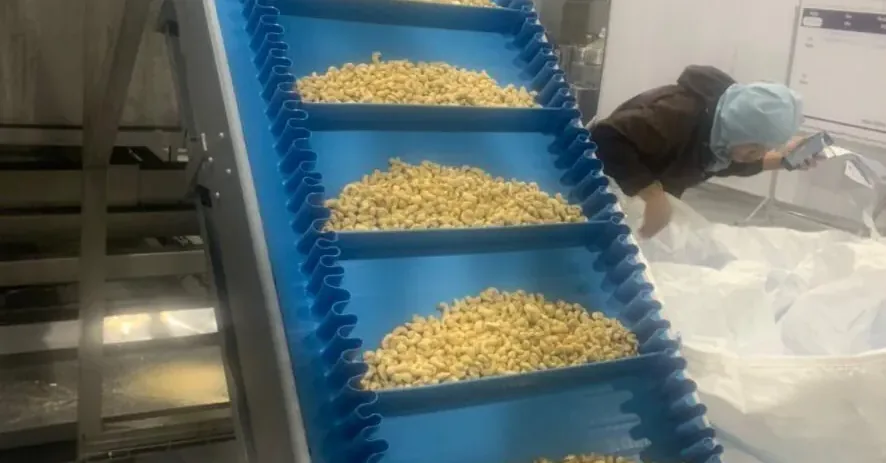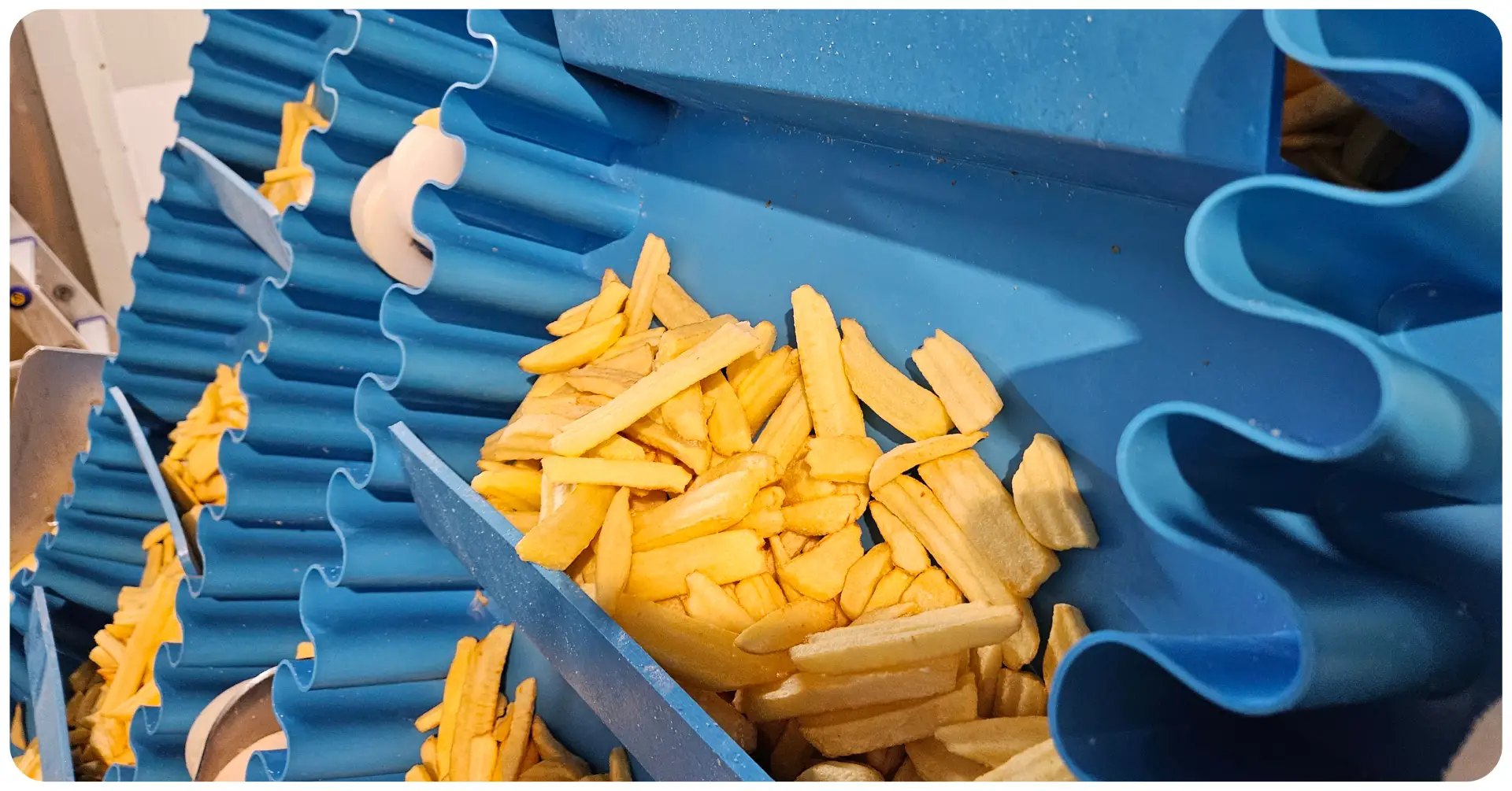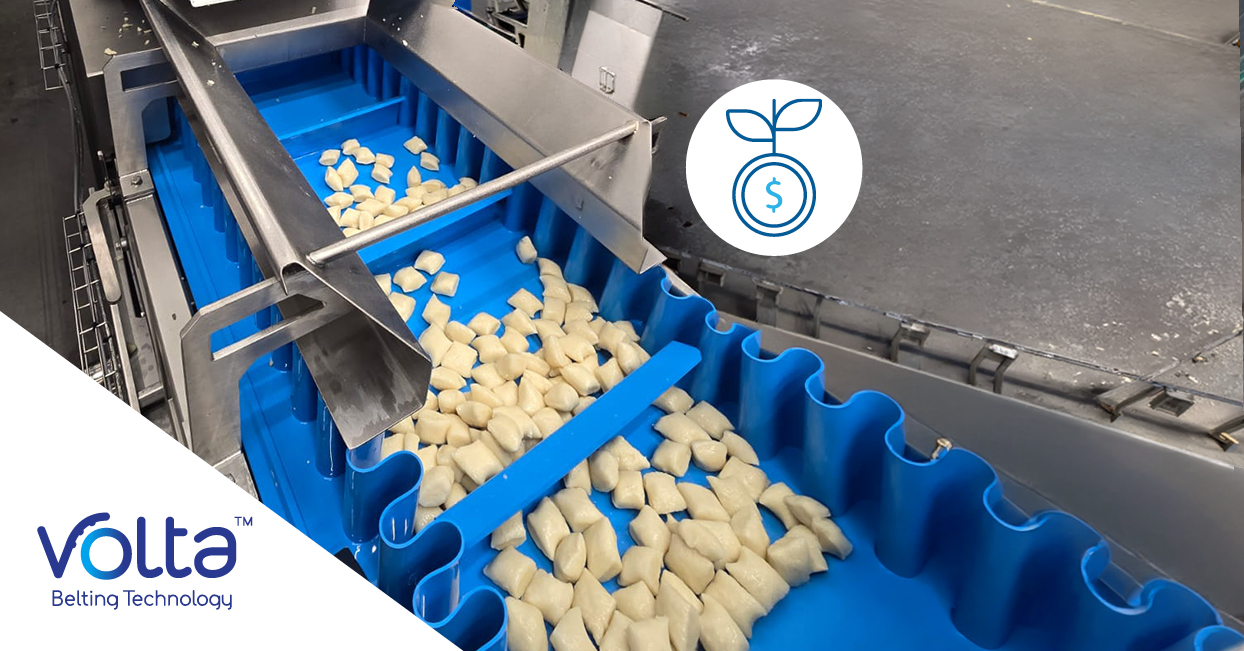
Choosing the right conveyor belts is no longer just a maintenance decision. It is a business decision that affects hygiene, uptime, cleaning costs, product quality, and long-term operating efficiency. Companies increasingly ask for guidance that goes beyond simple belt selection when designing new processing lines or upgrading existing ones.
The reason is straightforward: the wrong belt can become a major barrier to sanitation, sustainability, and performance.
Belt selection should be evaluated through the lens of true cost, not just purchase price. Lifespan and running costs need to be considered together, and hygienic conveyor and belt design now play a central role in overall plant performance. That includes low maintenance, fewer stoppages during shifts, reduced equipment wear, clean product quality, lower running costs, better sanitation, and improved sustainability.
For manufacturers, especially in food processing, this changes the conversation. A belt that looks inexpensive on day one may cost far more over time if it creates unnecessary downtime, traps contaminants, increases cleaning effort, or shortens equipment life. Incorrect belt selection creates more operational risk than ever before, even when food-certified belts are being used.
Why conveyor belts should be evaluated by total cost of ownership
The first major issue is cost of ownership. Equipment selection should not be compromised by short-term budget constraints because that lack of foresight often becomes disproportionately expensive over time. Technologies can become obsolete before their amortized lifespan is reached, production volumes may rise beyond planned capacity, and regulations may render older machinery unusable.
That is why conveyor belts should be assessed by the full operating impact they create. When hygienic design is combined with a real ownership-cost comparison of belt types, the economic benefits can begin appearing almost immediately. Those gains show up in the categories plants care about most: energy use, water use, labor, downtime, maintenance, yield, and product quality.
This is where the difference between a low-cost belt and a high-value belt becomes obvious. The cheapest option may not reduce labor hours. It may not simplify sanitation. It may not help operators maintain stable production. And it may not protect the conveyor itself from debris, fluid ingress, or avoidable wear.
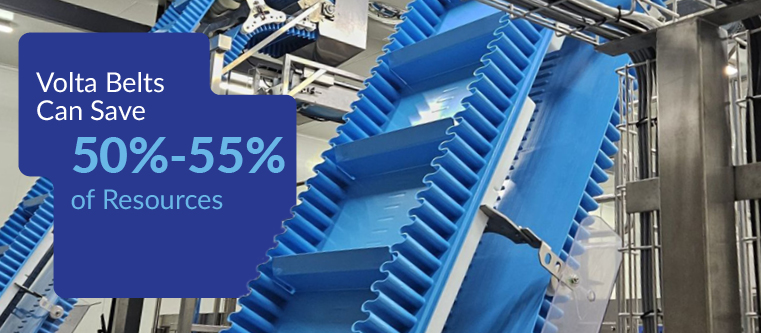
Independent research found that Volta belts can save 50% to 55% of resources compared with modular belts. Additional case-study evidence points to total savings of up to 75%, often by preventing material ingress into the conveyor and reducing cleaning demands.
For buyers, that is the real commercial story. Companies are not simply looking for conveyor belts. They are looking for conveyor belts that reduce labor, minimize sanitation time, improve yield, and lower total operating cost.
Hygiene is now a core performance metric
Hygiene is no longer a separate compliance issue. It is a core performance metric. Belt choice directly affects how quickly a line can be cleaned, how much water and labor are needed, how likely product residue is to accumulate, and how much wear the surrounding conveyor experiences. Volta’s broader approach connects hygiene, cost of ownership, and sustainability as part of the same operating challenge.
That matters because many companies still evaluate hygiene too narrowly. They may ask whether a belt is food-safe, but not whether the design helps reduce trapped material, lowers cleaning time, or limits the build-up of particles and pathogens. A belt can meet a technical requirement while still performing poorly in day-to-day production.
For production teams, hygienic performance influences:

sanitation time

uptime

water and chemical usage

product quality

equipment longevity
When those variables are considered together, hygiene becomes a measurable financial advantage rather than just a sanitation checklist item.
Why modular belt alternatives are getting more attention
Modular belts remain common in many facilities, but they are increasingly being re-evaluated where hygiene, cleaning cost, or plastic attrition are major concerns. The core issue is not just whether a modular system works. It is whether it works efficiently, hygienically, and economically over time.
That distinction matters because many processors keep familiar systems in place without fully accounting for the hidden costs they create. If a conveyor consumes excessive water, takes too long to clean, traps debris, or contributes to wear-strip attrition, the apparent convenience of the system may be masking significant waste.
This is why a modular belt alternative becomes commercially attractive. The argument is not just about replacing one belt with another. It is about reducing sanitation burden, lowering contamination risk, and improving the total economics of the conveyor system. The savings in resources, cleaning effort, and maintenance can outweigh the perceived comfort of staying with legacy designs.
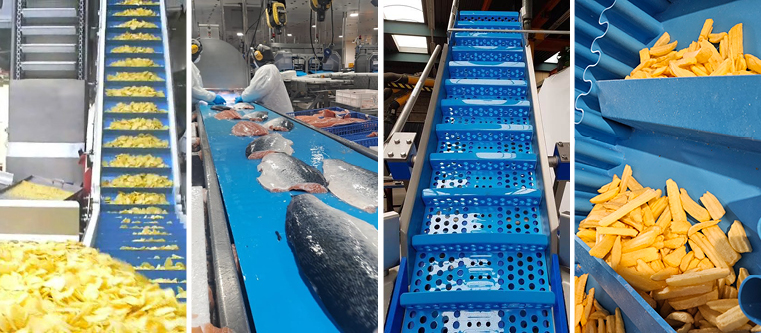
Retrofit opportunities can unlock fast value
One of the strongest sections is the discussion of retrofit tips. Not every plant is ready for a full conveyor redesign, and many are looking for improvements that can be implemented quickly and economically. That makes retrofit strategy especially important.
Many retrofits can be converted into hygienic upgrades with modest thought and investment. Replacing modular and fabric-based belts with monolithic belts does not automatically improve the conveyor itself, but hygienic belt systems can enable improved processing both mechanically and hygienically.
That is a credible and practical message. A belt alone does not solve every design flaw. But the right belt, paired with the right hygienic modifications, can materially improve the performance of the full line.
This is often where buyers see the quickest return. Instead of waiting for a full capital project, they can address high-friction sanitation issues, debris ingress, roller build-up, and avoidable cleaning cost through targeted upgrades.
Conclusion
The true cost of conveyor belts goes far beyond the initial purchase price. It includes the effect each belt has on uptime, sanitation, labor, maintenance, equipment protection, and the long-term efficiency of the entire production line.
That is why belt selection should be treated as a strategic decision. The right solution can reduce cleaning demands, improve hygienic performance, protect critical equipment, and create measurable savings across the operation. Whether the goal is to replace legacy modular systems or identify targeted retrofit opportunities, a better belt strategy can deliver immediate and lasting value.
Contact our belting experts today to find the right conveyor belt solution for your application.